
Two weeks ago I introduced the petition to recognize open source work as volunteering here and asked you to sign it. On Mastodon, one question promptly came up that bothered several readers: Why is the petition collecting signatures on openPetition (in German) and not on the petition portal of the German Bundestag (in German)? Initiator Boris Hinzer has since given an answer, and in my opinion it belongs here.
The criticism on Mastodon
It started with the question of why the petition isn’t on the one portal that obliges the Bundestag to deal with it. A few days later another reader followed up: as he understood it, signatures collected on other sites are worthless in the end. A third commenter was the most outspoken and even suspected a scam behind the petition:

Bei einer Petition auf einer Plattform eines privaten Anbieters von Quorum zu sprechen, um den Anschein zu erwecken, es handele sich hier um eine ernstzunehmende Petition eines Parlamentes, die tatsächlich eine Parlsmentsanhörung erwirken könne, ist schon eine besonders dreiste Masche…
That’s not entirely off the mark. Since July 2024, the Bundestag’s rule has been: If a petition gathers 30,000 co-signatures on the Petitions Committee’s portal within six weeks, the committee discusses it in public. Signatures on openPetition don’t count toward that, and the collection there has been running since November 2025. In my first article I had simply taken the term quorum from openPetition without explaining the difference.
// New petition portal
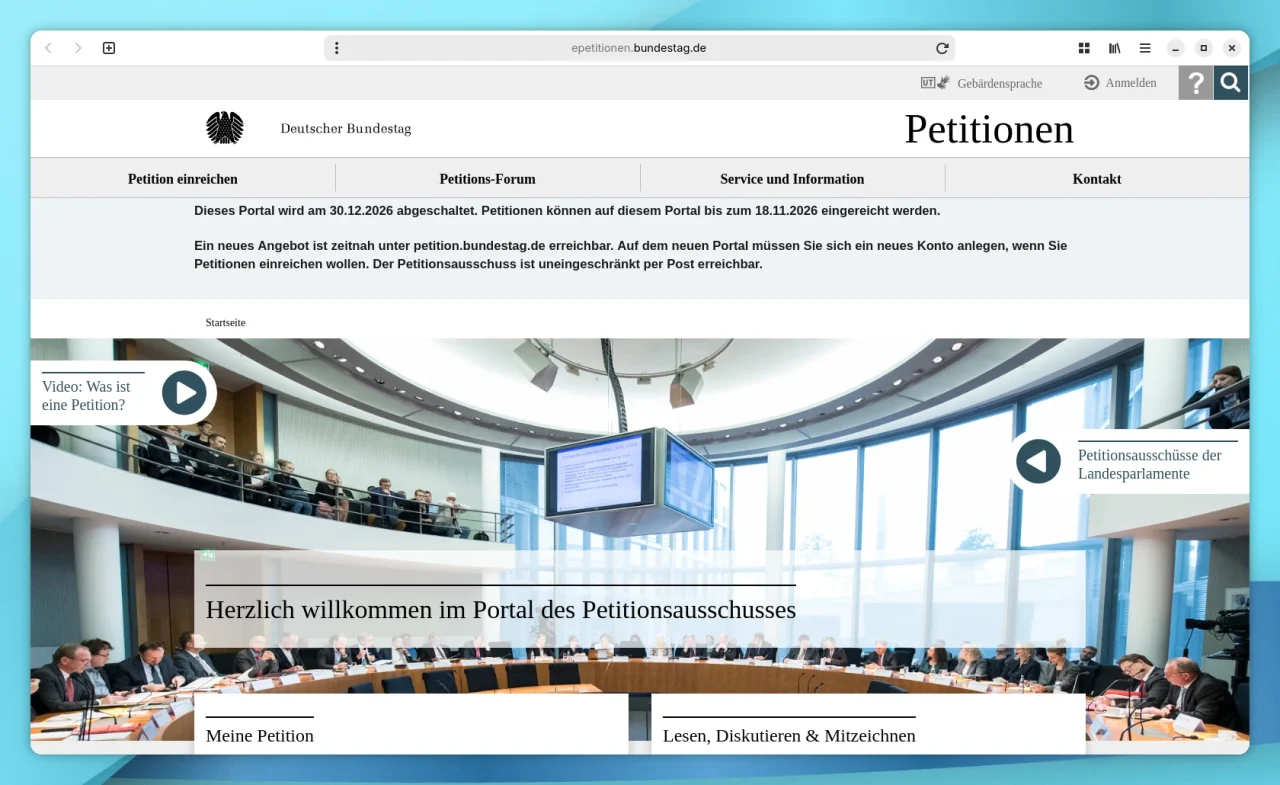
The current portal at epetitionen.bundestag.de (in German) will be shut down on December 30, 2026, and new petitions could only be submitted there until November 18. According to the Bundestag, its successor will be available “shortly” at petition.bundestag.de, and anyone who wants to submit petitions there needs a new account. The Petitions Committee remains fully reachable by mail.
I had replied that petitions rarely have a direct effect, but they create publicity, including outside our cozy open source bubble. That’s why I considered the platform secondary. The commenter disagreed and pointed to the e-petitions on plug-in solar panels and against cuts to maternity protection after miscarriages. Media interest beforehand had been modest, he wrote, and it was the hearings that got politicians to act:

Sehe ich tatsächlich anders – gerade wenn es darum geht, dass der Bundestag etwas beschließen möge (und das wäre ja auch hier das eigentliche Anliegen).
Bei der #ePetition für eine Vereinfachung der Regeln für #Steckersolar hielt sich das mediale Interesse im Vorfeld in Grenzen, ebenso bei der ePetition gegen die Einschnitte beim #Mutterschutz nach Fehlgeburten.
Die Anhörungen der Experten:innen aus der Zivilgesellschaft haben dazu geführt, dass die Politiker:innen gehandelt haben!
The initiator’s answer
The explanation then came with a pointer in the thread to the petition’s website:

Das hat Boris Hinzer, der Initiator der Studie, unter ehrenamt-opensource.de/fragen-… beantwortet.
In the FAQ, Boris answers the question with refreshing honesty: When he started the petition, he simply didn’t know about the Bundestag’s platform. By the time he noticed, the petition had already been shared and signed through various channels. Once you have a few thousand signatures together, it’s understandable that you don’t want to start from zero again.
Later, Boris wrote to the Petitions Committee. According to Boris, it replied “in bureaucratese” that the written route is always open for the petition. A lawyer who has already helped several open source projects become registered non-profit associations also looked into the case. His advice, put simply: carry on with the current platform. So a petition to the Bundestag doesn’t necessarily have to go through its portal.
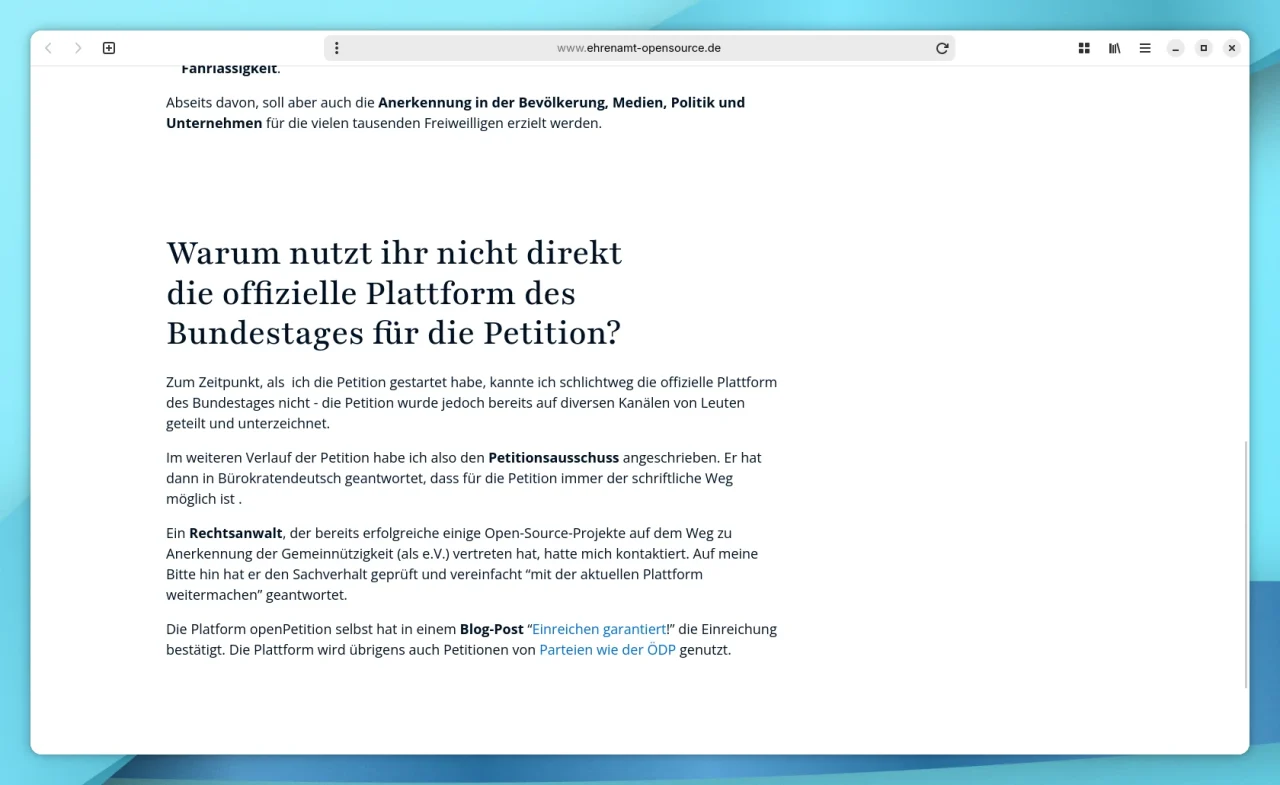
Boris also points to openPetition itself. In January 2025, the platform announced in the blog post Einreichen garantiert! (“Submission guaranteed!”, in German) that it would submit petitions addressed to the Bundestag or a state parliament to the responsible committee itself. That happens three months after the collection ends, if the initiators haven’t done it already. Since April 2026, however, openPetition only submits when the initiators explicitly ask for it.
What this means for your signature
In other words: The petition lands on the Petitions Committee’s desk, and the committee has to deal with it, just like with any other submission. What openPetition can’t deliver is the public hearing tied to 30,000 co-signatures on the Bundestag portal. The 30,000 on openPetition are the platform’s own threshold, modeled on that number. On this point, the critics are right.
That doesn’t make the signatures worthless, though. The more names there are under a petition, the harder it is to brush off, both in the committee and in public. Heise, ComputerBase, BR24 and Deutschlandfunk have reported on the cause, and KDE, the Gesellschaft für Informatik and the TYPO3 Association support it. That way, the demand reaches people who have probably never heard of the Bundestag’s petition portal – just like Boris himself.
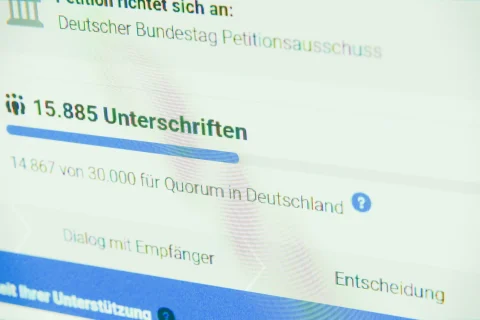
A look at the counter: Today, openPetition shows 16,744 signatures, 15,684 of which count for Germany. That’s 52 percent of the targeted 30,000, and the collection ends on November 23, in four days. Anyone can sign, but only signatures from people whose residence is in Germany count toward the quorum. If that’s you and you haven’t signed yet, you can catch up on openPetition. For the next open source petition, the official portal would still be the better choice in my opinion. What do you think?
A call to the newsrooms
One last request, not so much for me as for open source: The petition still needs a few more signatures. Dear editors at Heise, Golem and Linux-Magazin, and also at SZ, FAZ and the like, in case you read along here or this article somehow washes up in your timelines: Please run one more call to sign. Another news item won’t take you much time. Time, however, is something the petition doesn’t have much of anymore.
Leave a Reply