
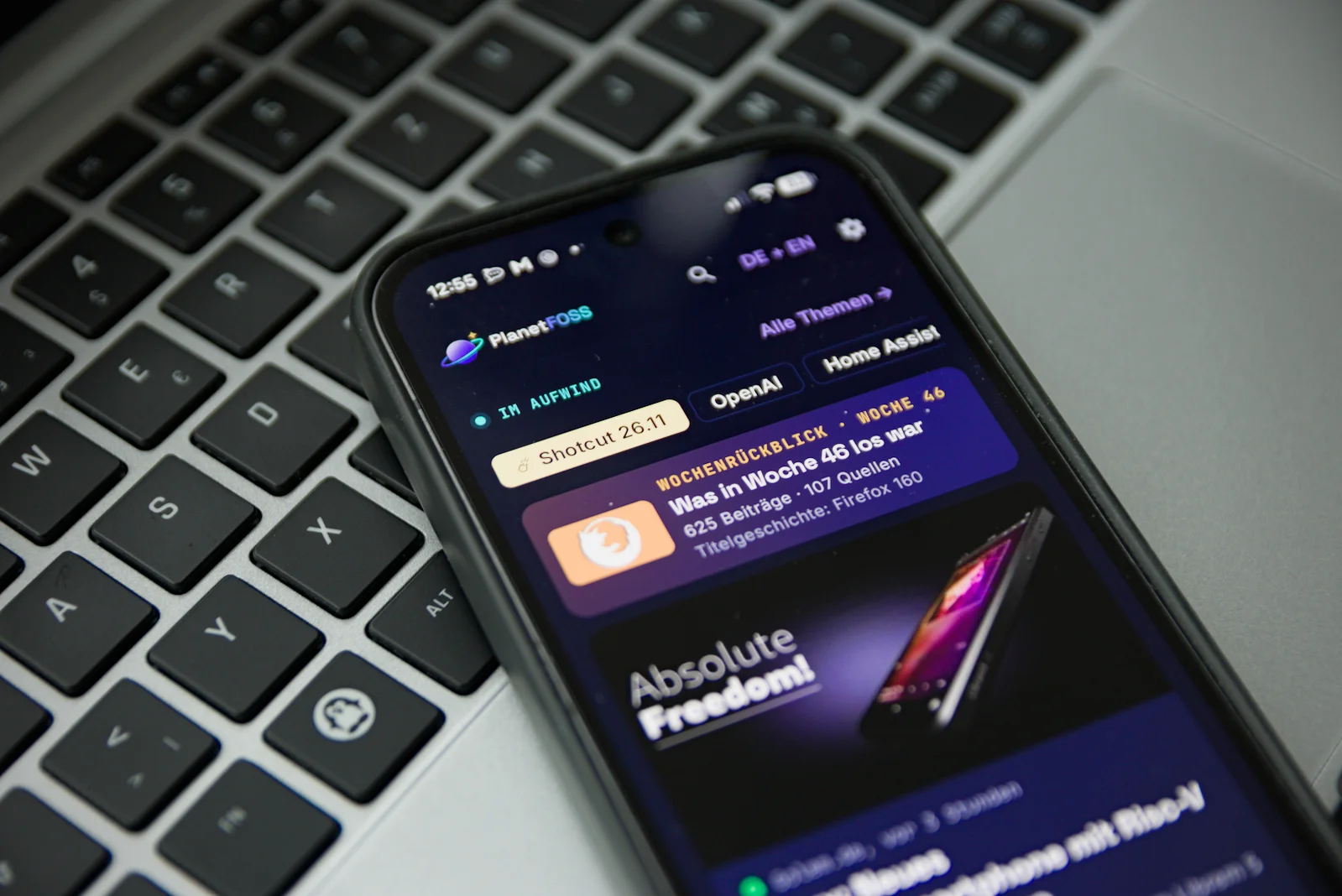
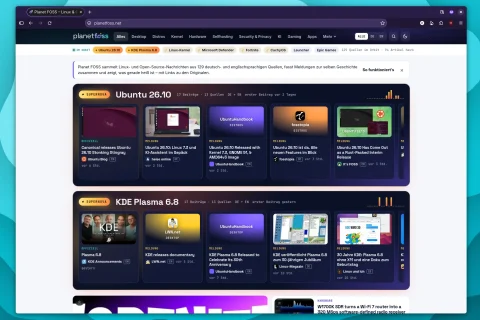
For a good four weeks now, PlanetFOSS has been collecting Linux and open source news from around 200 German and English sources. Every card leads to the original article, and stories that many sites cover at the same time get a name of their own: supernova. Until now, that only worked in the browser. Now the planet also comes as an Android app, and it runs without an account and without Google services.
The first four weeks show that there is demand for it. Since the launch on October 20, the site has been getting around 2,000 page views a day, a good 60,000 in total by mid-November. The account on Mastodon now has 181 followers, and on Bluesky, where the account has only existed since early November, the first 13 have joined.
So why an app on top of that? News is something you like to read on the spur of the moment. Sure, a website opens quickly. But an app can do more: it notifies you when something important happens, it remembers what you have already seen and what you have saved, and it helps you keep track. That is why the planet gets a second channel next to the website.
Four tabs, and the important stuff is on top
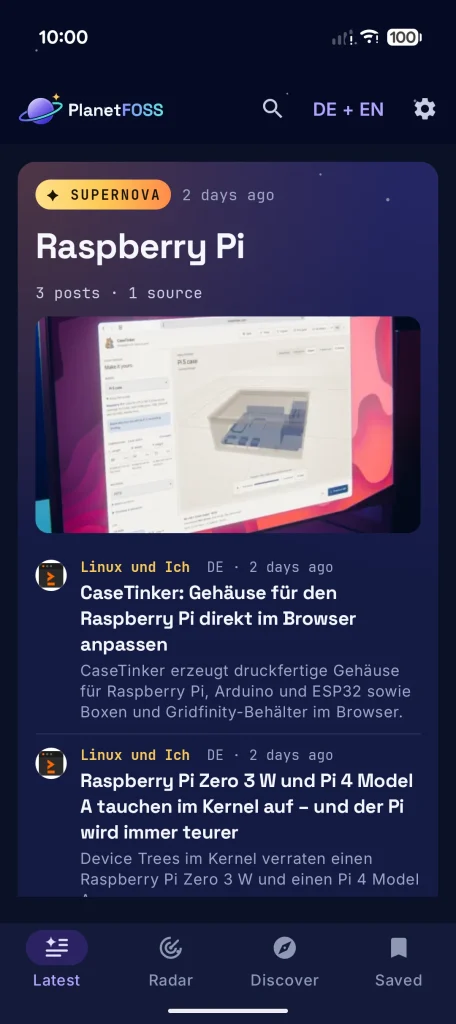
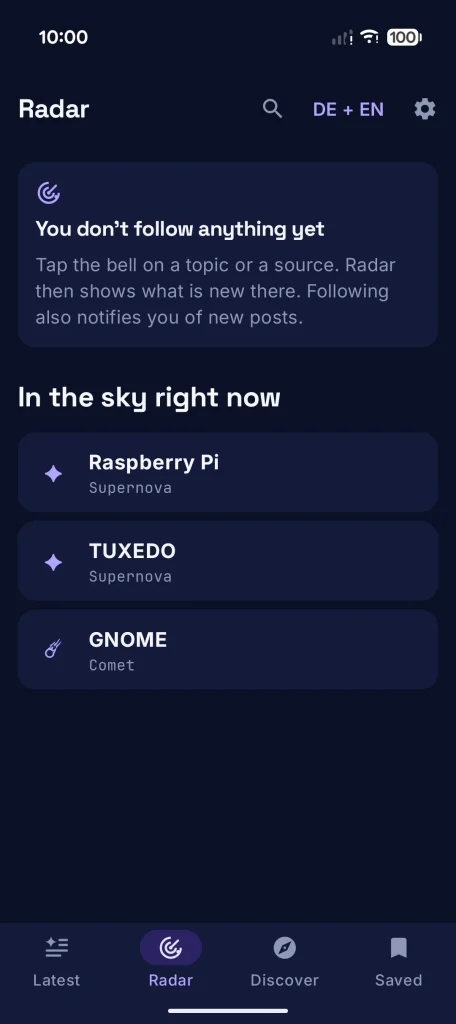
The app starts with Latest. At the very top you find every supernova that is burning right now, below them the comets, which are topics on the rise. After that comes the stream of the newest posts. The same story from different sources is bundled, so you don’t read the same release news five times. Then there are Radar for everything you follow, Discover for search and rubrics, and Saved.
Supernovas and comets
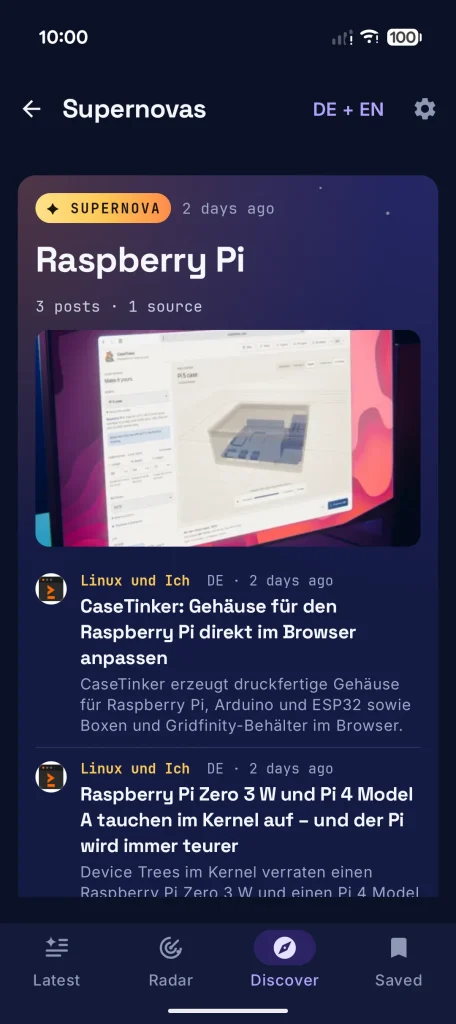
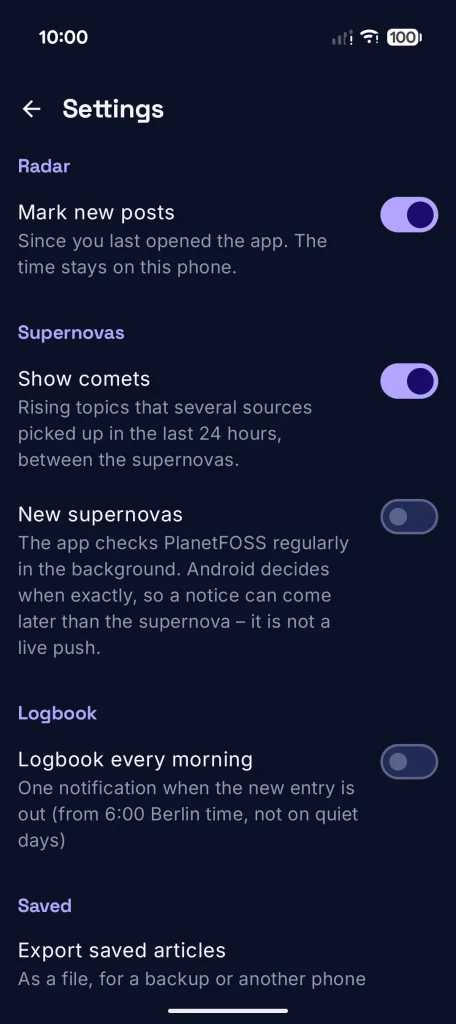
A supernova appears when many sources report on the same topic at the same time, say a new Blender version or a Firefox release. The card then lists all the reports, so you see right away who writes what. Comets are the quieter relatives: topics on the rise that several sources have covered in the last 24 hours. If you don’t want to see them, switch them off in the settings.
If you like, the app notifies you about a new supernova. There is no push server for that, Android asks PlanetFOSS in the background at regular intervals. A notification can therefore arrive a little later than the supernova itself, so this is no live ticker. In return, the app needs no service from Google, and notifications are off by default. If you prefer it quiet, just leave them off.
Logbook and weekly review
Every morning from 6 a.m. there is a new logbook entry: the most important things of the last 24 hours, with the biggest story, the comets on the rise and the new releases. On quiet days there is no entry. If you like, you get a notification in the morning or put the logbook on your home screen as a widget. Older editions are in the archive, so you can read what you missed.
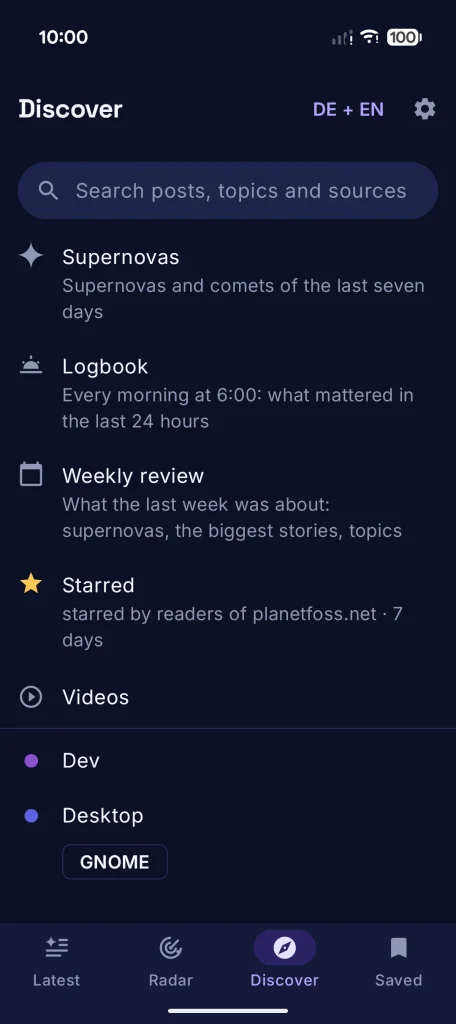
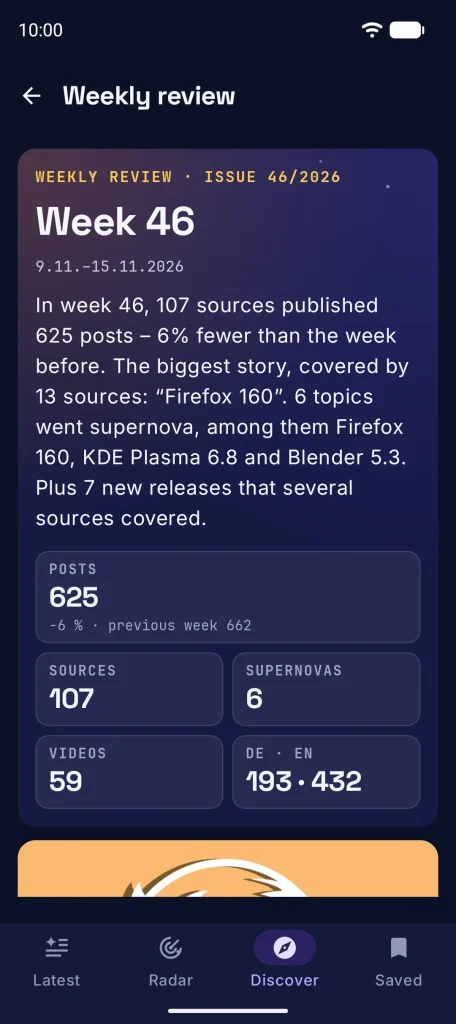
The weekly review sums up the last full week. In week 46 there were 625 posts from 107 sources, six topics turned supernova, and the biggest story was Firefox 160. On top of that come the most noticed releases and the topics of the week. You find both under Discover, which is also home to search, rubrics, videos and the starred posts, meaning posts that readers have marked with a star.
Follow instead of scrolling
Tap the bell on a topic or a source, and Radar shows what is new there. The app marks new posts since your last visit, and if you want, it sends you a notification. Which topics and sources you follow and when you last looked in is stored only on your phone. For that, the app fetches the same public lists you see anyway.
To read something later, there is the bookmark. Those posts end up under Saved and are available offline. Articles open in your phone’s browser by default. If you like, use the app’s own browser with optional protection from third-party trackers. The app does not block ads by itself and passes PlanetFOSS on as the referrer, so the sites can see where their readers come from.
No account, no Google, no tracking
The app needs no account, no analytics service and no Google services. It only talks to planetfoss.net and to the sites you open. Only the tracker protection downloads filter lists, and only if you switch it on. The interface comes in German and English, and the content in German, English or both. The app is free software under the GPL and, like my other projects, was built with AI assistance.
// What gets counted
The server counts requests for the lists as daily totals, without IP address and without an identifier. The app only reports opened articles if you switch on Count anonymously for the sources, which is off by default. There are no sponsor cards at the moment. Should any show up, the app counts the cards seen without a switch, just as the website counts ad views.
Testers wanted
PlanetFOSS is in closed testing on Google Play, with the planet’s new logo as its app icon. New developer accounts have to show the app to at least twelve testers who stay on board for 14 days in a row before it may go public in the Play Store. If you join, you help me directly. The app needs Android 14 or newer.
- With the Google account on your phone, join the group PlanetFOSS Tester. The group sends no mail, it only grants access.
- On the testing page on Google Play, tap Become a tester.
- Install the app from the link on the testing page or straight from Google Play, and please keep it for two weeks.
If you prefer not to use a Google account, the source code and a ready-made APK are on GitHub, with the current version under Releases. Google Play signs the app with its own key, so switching between the two builds only works by reinstalling. The app is supposed to come to F-Droid as well. Everything else is on the project page.
Bugs, wishes and ideas are welcome in the comments or as an issue on GitHub. One thing interests me most: What is missing for PlanetFOSS to become your first stop for Linux news on your phone?
Leave a Reply