
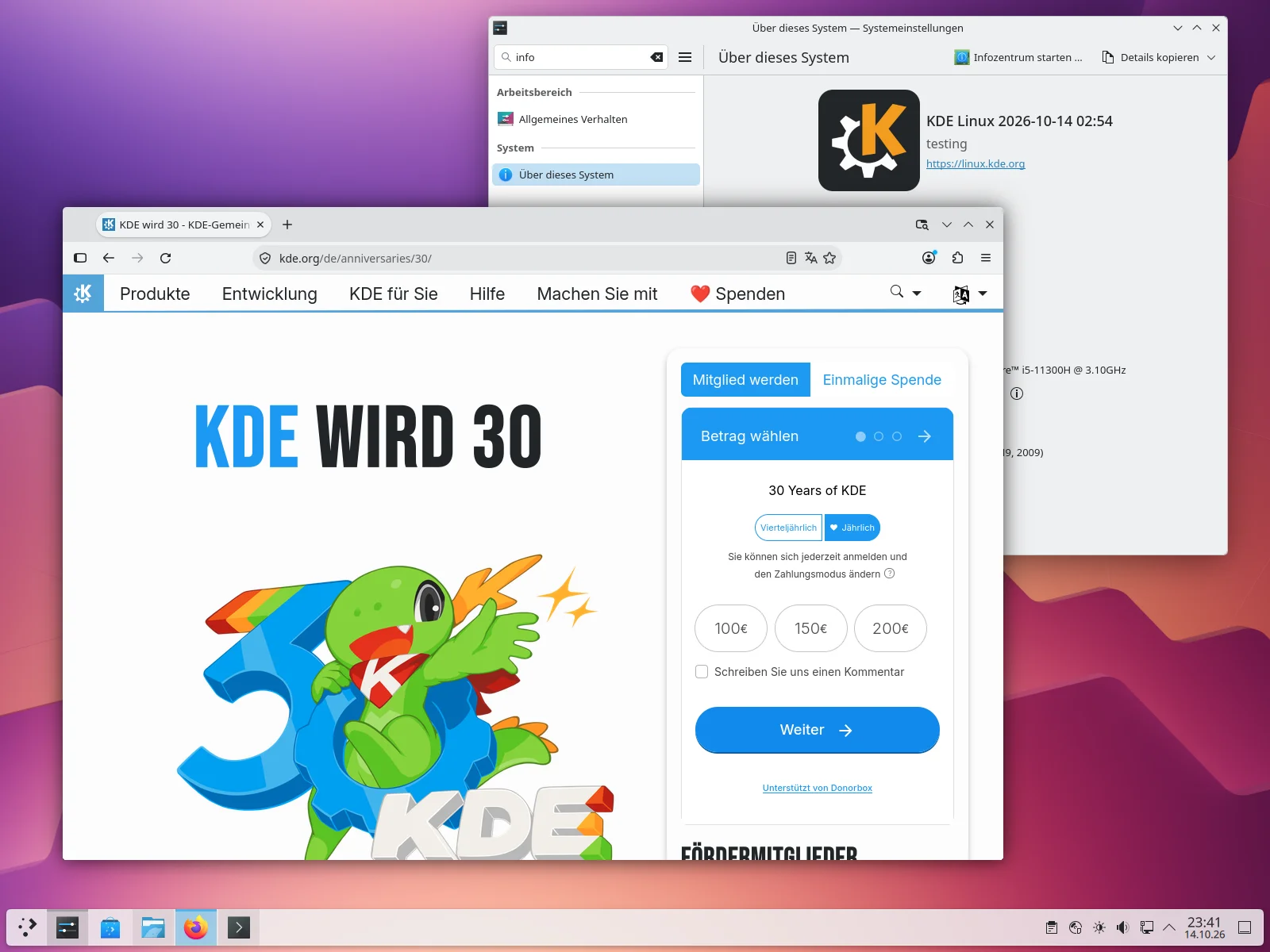
Exactly 30 years ago today, on October 14, 1996, a student from Tübingen named Matthias Ettrich went looking for fellow developers on Usenet. His goal: a graphical interface for Linux that ordinary end users could handle, not just admins. That call turned into KDE, one of the largest communities in free software. For the birthday there are three things: Plasma 6.8, a documentary, and a fundraiser.
The name originally stood for Kool Desktop Environment, a nod to the commercial Common Desktop Environment (CDE) on other Unix systems. Because KDE was built on Qt, whose license wasn’t really free back then, GNOME came about as the counter-project. The short version of the years that followed, according to heise (in German): the KDE e.V. association in 1997, KDE 1 in 1998, later the much-loved KDE 3, and in 2008 the rather bumpy KDE 4.
KDE 4 drove a lot of users away at the time, and some still maintain its predecessor today as the Trinity desktop. At the same time, that release brought along programs like Dolphin and Okular as well as the Plasma interface. Today the project is split into the KDE Frameworks libraries, the KDE Gear applications, and the KDE Plasma desktop. Plasma now also runs on smartphones, TVs, and the Steam Deck.
Plasma 6.8: So Long, X11
Right on time for the birthday, Plasma 6.8 is out, and this release draws a thick line: Plasma no longer starts an X11 session and runs on Wayland only. GNOME already led the way here. Older programs that still need X11 keep working through XWayland. The KDE applications themselves are supposed to keep working on X11 desktops for the time being.
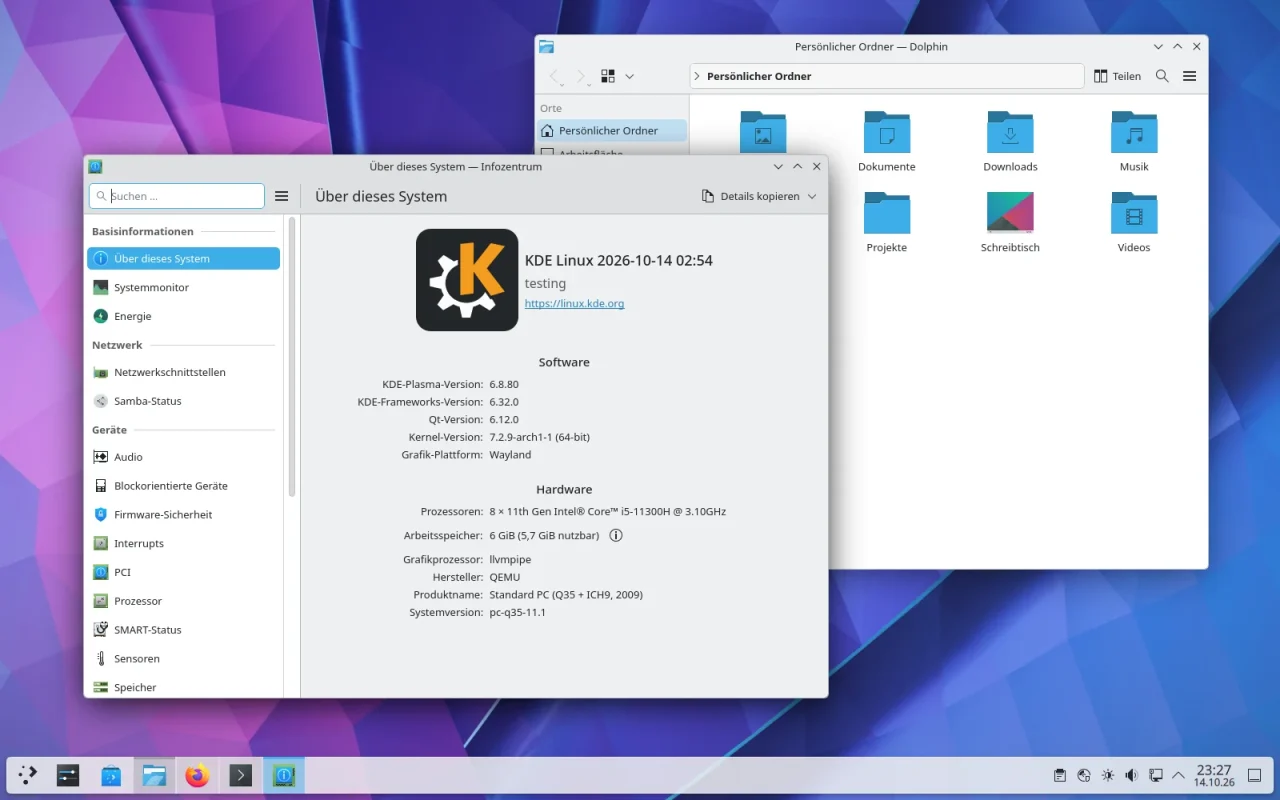
Under the hood, KWin now renders through OpenGL ES only, according to 9to5Linux, with Vulkan to follow later. NVIDIA graphics get triple buffering by default, and the Plasma shell starts faster. In everyday use, Spectacle stands out: screen recordings now capture system audio and the microphone. Also new are the Kup backup tool and dwell clicking, and Steam windows finally get shadows and rounded corners.
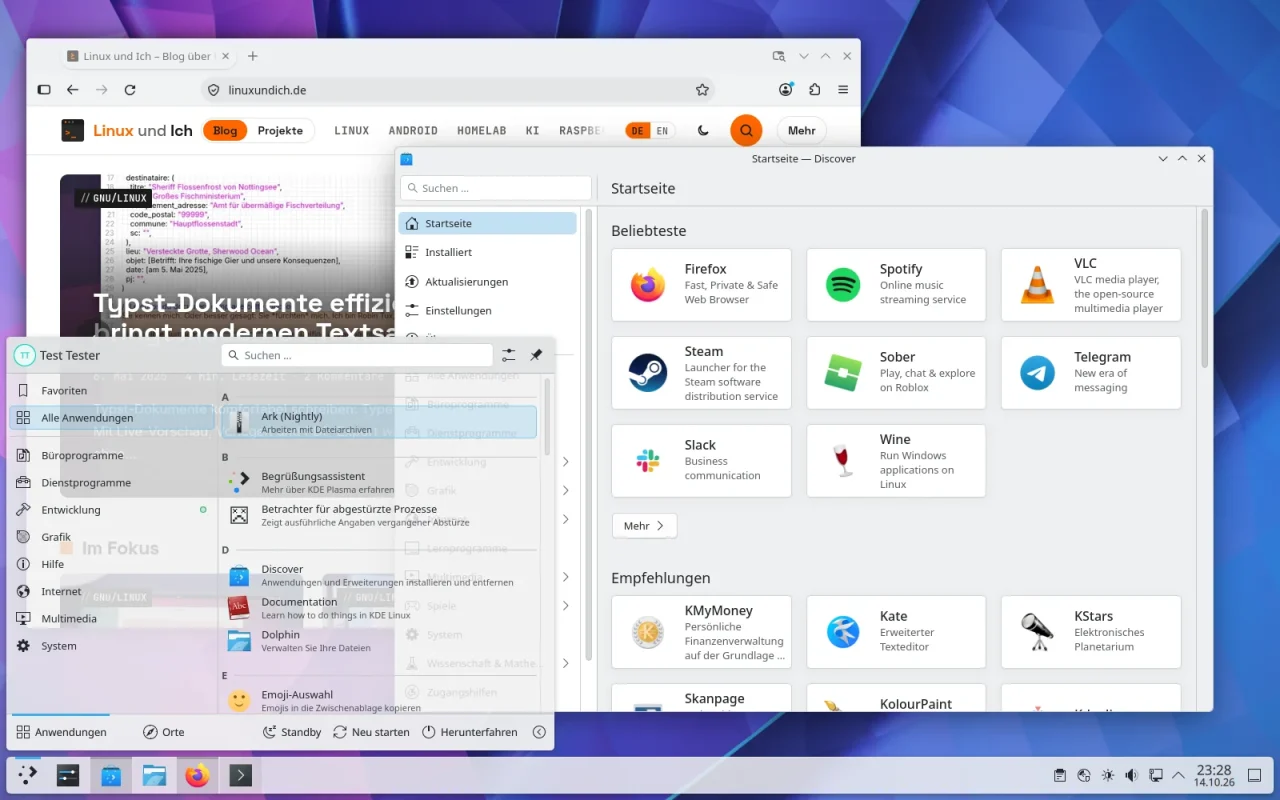
When you get Plasma 6.8 depends, as usual, on your distribution. According to OMG! Ubuntu, rolling-release distros like Arch Linux will ship it in the next few days, while KDE neon will take a few weeks. Kubuntu 26.10 just missed the date and stays on Plasma 6.7. So there it’s a matter of waiting or hoping for a backport.
KDE: The Documentary
If you’re interested in the story behind the version numbers, set aside a good hour. The YouTube channel CultRepo made a documentary with support from KDE, which premiered at 7:30 p.m. German time (CEST). KDE: The Documentary – The Story of Free Software Underdogs runs for just over an hour.
The documentary covers the highs and lows of three decades: the fight over the Qt license and the rivalry with GNOME, the success of KHTML, which later became WebKit and thus also Chrome, and the KDE 4 debacle. Among those interviewed are Matthias Ettrich, Lars Knoll, Aaron Seigo, Nate Graham, and – a nice touch for the GNOME camp – GNOME co-founder Miguel de Icaza.
Birthday Donations
Of course, free software doesn’t run without money either. That’s why KDE has launched a year-end fundraiser, with milestones at 50,000, 75,000, and 100,000 euros listed on the page. Among other things, the money is meant to go into accessible and energy-efficient software. If you want to support KDE in the long run, you can become a supporting member. Fittingly for its founding year, KDE raised that goal from 1,500 to 1,996 members.
KDE and Me
My own Linux journey started with window managers like Window Maker and Enlightenment E17. At some point, around the KDE 3.x days I’d guess, I ended up with KDE as well. A complete desktop with all the bells and whistles – for Linux, that was outstanding at the time. Until then, you usually had to piece together a panel, a file manager, and all the rest yourself.
That said, I never became a KDE devotee. Back when I was posting as “Chrissss” on ubuntuusers.de, the big German Ubuntu community, I was firmly on the GNOME side and regularly asked the KDE folks for help whenever a wiki article needed a KDE section. For an article about Bluetooth mice I did install KDE 4 once – and was surprised it didn’t even come with Bluetooth settings.
Still, KDE never quite let go of me. In 2009 I congratulated KDE on 4.3 (in German) here on the blog and wondered whether the developers might yet convince an old GNOME guy like me to switch. That didn’t quite work out. But I brought KDE Connect into GNOME via an extension (in German), and when I write Markdown on KDE, I do it with Kate (in German). If KDE, then all the way.
All in all, the Linux desktop would look very different today without KDE – and without the never-ending rivalry between the two, so would GNOME. In my opinion, the project did a lot to make Linux usable on ordinary computers in the first place. So: happy 30th birthday, KDE! How long have you been using KDE, and which version stuck with you the most?
Leave a Reply