
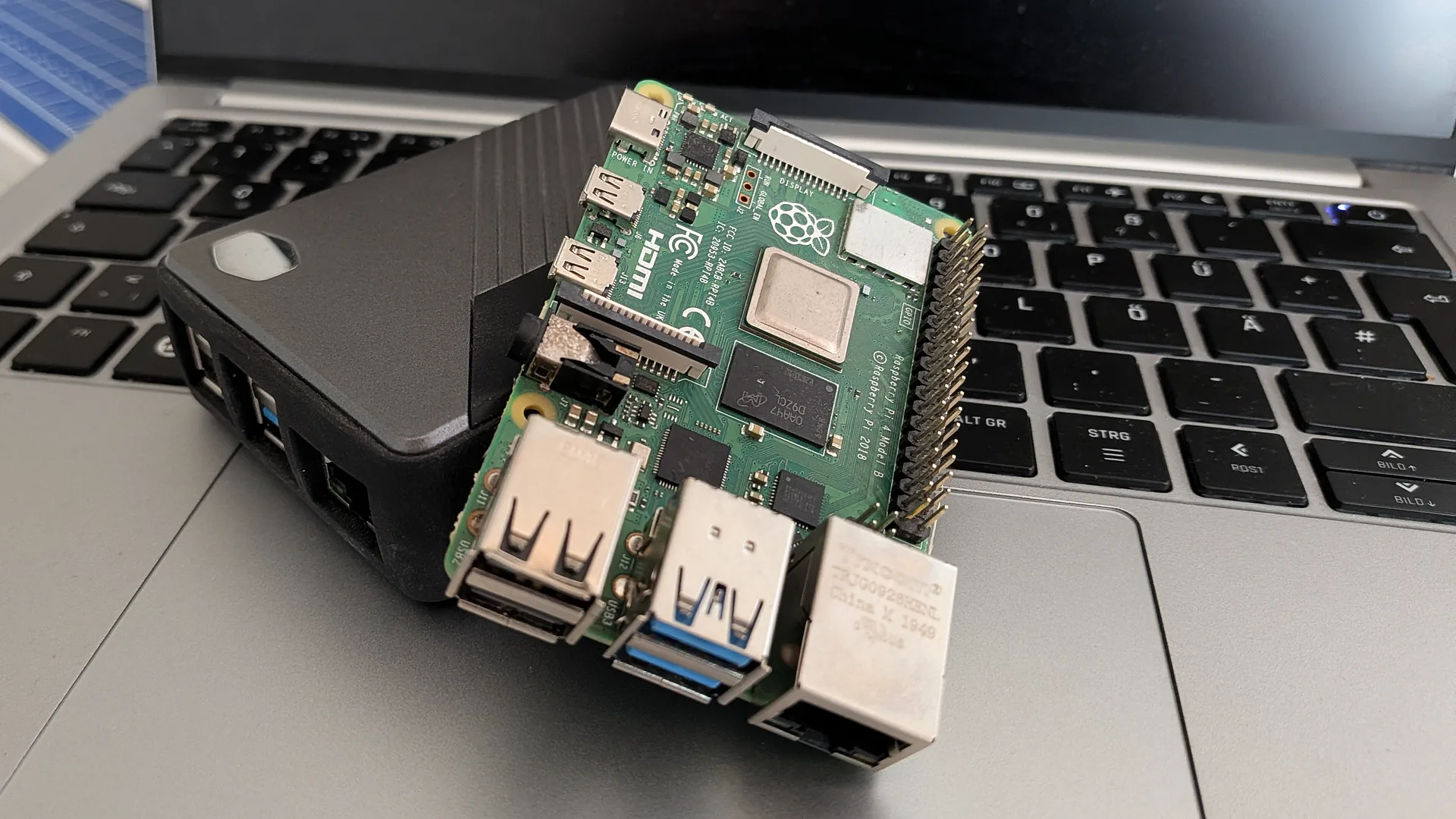
Two boards that don’t officially exist yet have turned up in Raspberry Pi’s kernel repository: a Raspberry Pi Zero 3 W and a Raspberry Pi 4 Model A. A pull request adds ready-made device trees for both, the hardware description the kernel needs. It was merged on October 25, and Phoronix and Golem (in German), among others, spotted it. There’s no word on prices or a release date yet.
What we know about the two new boards
The files don’t give away much, but a few key facts can be read from them. Both boards use the BCM2711 with four Cortex-A72 cores, the same chip found in the Raspberry Pi 4. How much RAM they get isn’t in there. What is in there: Wi-Fi and Bluetooth, a camera connector and, unlike the Pi 4B, only one HDMI output instead of two.
A nice touch: both device trees mention a power button, something only the Pi 5 had so far. For the Zero, the Pi 4 chip is a big step up anyway, since the Zero 2 W is already five years old. According to Golem, the Zero 3 W will probably get its memory as a separate chip, presumably on the back, instead of inside the processor package as before.
The Model A is the more interesting one to me, though. The A variants have always been the stripped-down siblings of the B models: smaller, more frugal, with fewer ports, but cheaper. The Pi 4A also drops the USB hub and the network chip, while Wi-Fi and Bluetooth stay. Two pins are also set aside for controlling two antennas, so Golem suspects you’ll be able to connect external antennas for the first time.
Two more pins carry PCIe in their name. Whether the Pi 4A brings a PCIe interface to the outside like the Pi 5 does, say for an NVMe SSD, can’t be said for sure, though. That a stripped-down Pi 4 is coming right now is hardly a coincidence. Phoronix links it to rising component prices, and those are the big topic around the Pi at the moment.
From 35-dollar computer to luxury item
As a reminder: the Raspberry Pi launched in 2012 with a clear promise, a full-fledged Linux computer for 35 dollars. And that promise held for a surprisingly long time. The Pi 1 B, the B+, the Pi 2 (in German), the Pi 3 (in German) and the 3B+ all cost 35 dollars at launch. Even the Pi 4 with 1 GB of RAM still launched at that price in 2019.
| Model | Launch | Launch price | List price October 2026 | Street price in Germany |
|---|---|---|---|---|
| Raspberry Pi 3 B+ | 2018 | 35 dollars | 40 dollars | 41 euros |
| Raspberry Pi 4 B, 1 GB | 2019 | 35 dollars | 35 dollars | 40 euros |
| Raspberry Pi 4 B, 2 GB | 2019 | 45 dollars | 67.50 dollars | 80 euros |
| Raspberry Pi 4 B, 4 GB | 2019 | 55 dollars | 100 dollars | 107 euros |
| Raspberry Pi 4 B, 8 GB | 2020 | 75 dollars | 165 dollars | 165 euros |
| Raspberry Pi 5, 1 GB | 2025 | 45 dollars | 45 dollars | out of stock |
| Raspberry Pi 5, 2 GB | 2024 | 50 dollars | 77.50 dollars | 120 euros |
| Raspberry Pi 5, 4 GB | 2023 | 60 dollars | 110 dollars | 122 euros |
| Raspberry Pi 5, 8 GB | 2023 | 80 dollars | 175 dollars | 189 euros |
| Raspberry Pi 5, 16 GB | 2025 | 120 dollars | 305 dollars | 331 euros |
Street price: cheapest offer available for immediate delivery at Geizhals or Berrybase on October 28, 2026, rounded, excluding shipping.
The first dent came in October 2021: during the chip crisis, Raspberry Pi raised a price for the very first time, and the 2 GB Pi 4 went from 35 to 45 dollars. The Pi 5 then launched in 2023 at 60 dollars for 4 GB and 80 dollars for 8 GB, which in my opinion was still fine given the big jump in performance.
Things only really took off at the end of 2025. Since December, Raspberry Pi has raised prices four times: in December, February, April and most recently on October 1. The culprit is RAM, which AI data centers are currently buying up. According to the half-year results, the cost of one gigabyte of LPDDR4 in Raspberry Pi’s own stock rose from 3.60 dollars at the end of 2025 to 13.30 dollars at the end of June 2026.
You can read the result straight from the table. At 175 dollars, the 8 GB Pi 5 costs more than twice its launch price, and at 305 dollars the 16 GB version sits in territory that has nothing to do with a tinkering board anymore. Raspberry Pi only keeps the 1 GB models stable – but in 2026, you won’t get very far with that little RAM.
Even the boards themselves are getting scarce
Expensive is one thing, but some models simply can’t be had anymore. Berrybase lists the 1 GB Pi 5 at 46.90 euros, but it’s not in stock anywhere. The shop lists the 2 GB Pi 5 at 82.50 euros, also without stock. If you want one right away, you’ll pay just under 120 euros at other retailers. In early October, Nydus (in German) had found prices of at least 130 euros.
Things look even worse for the Zero 2 W. The little Pi has been sold out for months, Reichelt has dropped it from its range, and Amazon only has third-party kits for around 130 euros. According to Raspberry Pi, roughly one million Zeros are on back order. Here it’s not memory that’s lacking, but production capacity at a supplier – and the AI boom is eating that up too.
On top of that comes an effect you could have seen coming: if you no longer want to pay for a Pi 4 or Pi 5, you reach for the cheapest model that runs a full Linux. That pushes demand for the Zero 2 W even higher. Raspberry Pi says it has brought a second supplier on board, but the new stock hasn’t reached European retailers so far.
What’s left of the tinkering computer?
And that’s exactly what I find a shame. The Pi was always a computer you’d just pick up for a project. A media center (in German) here, a jukebox (in German) there, and if an experiment went wrong, well, 35 dollars were gone. At 110 or 175 dollars for a Pi 5, you think twice. The tinkering spirit that made the Pi big falls by the wayside.
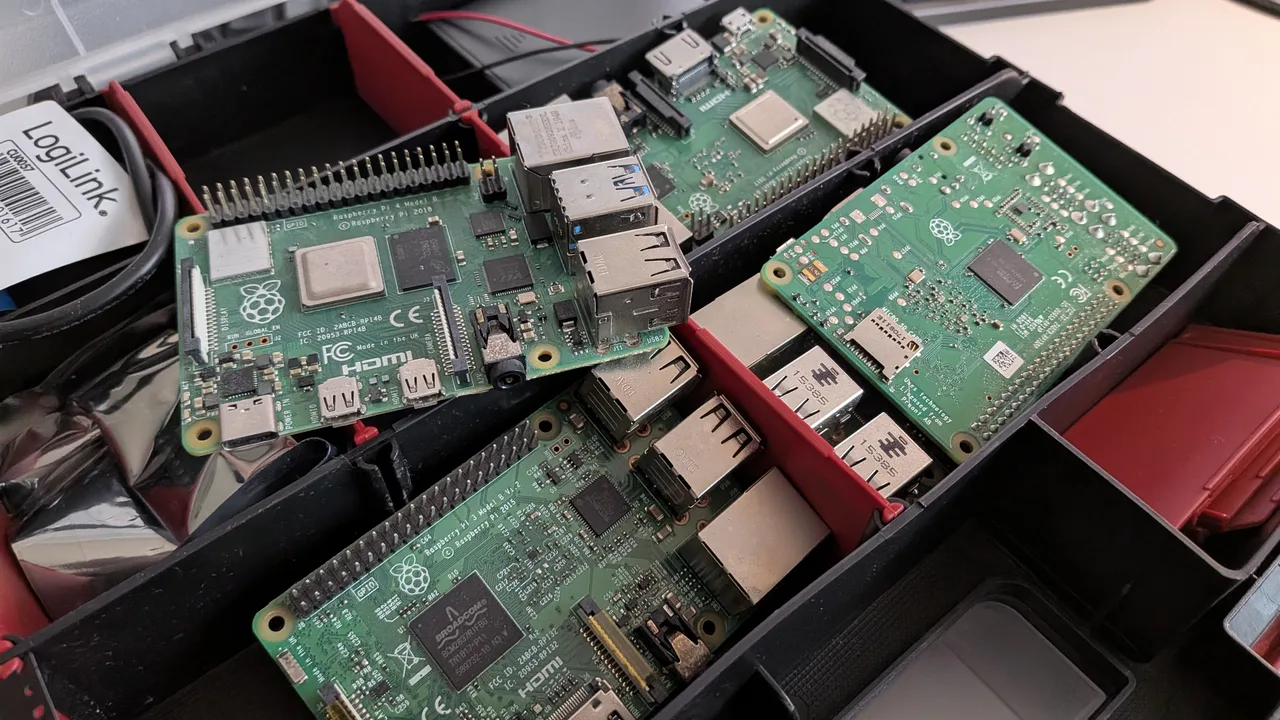
Raspberry Pi itself now recommends going for older models such as the Pi 3B or 3B+ and checking carefully how much memory a project really needs. Too bad that, according to Golem, of all boards the 3A+ has been hard to get for months in some places. Eben Upton promises to lower prices again once memory gets cheaper. Micron, however, expects shortages until 2028 or beyond.
So a Zero 3 W and a Pi 4A with the Pi 4’s older but proven chip might be exactly what the tinkering community is missing right now. Provided the price stays reasonably down to earth and the boards actually make it to the shops. What do you think? Have you bought a Pi recently, or have you already switched to something else?
Leave a Reply